Two meetings in five weeks is the whole story
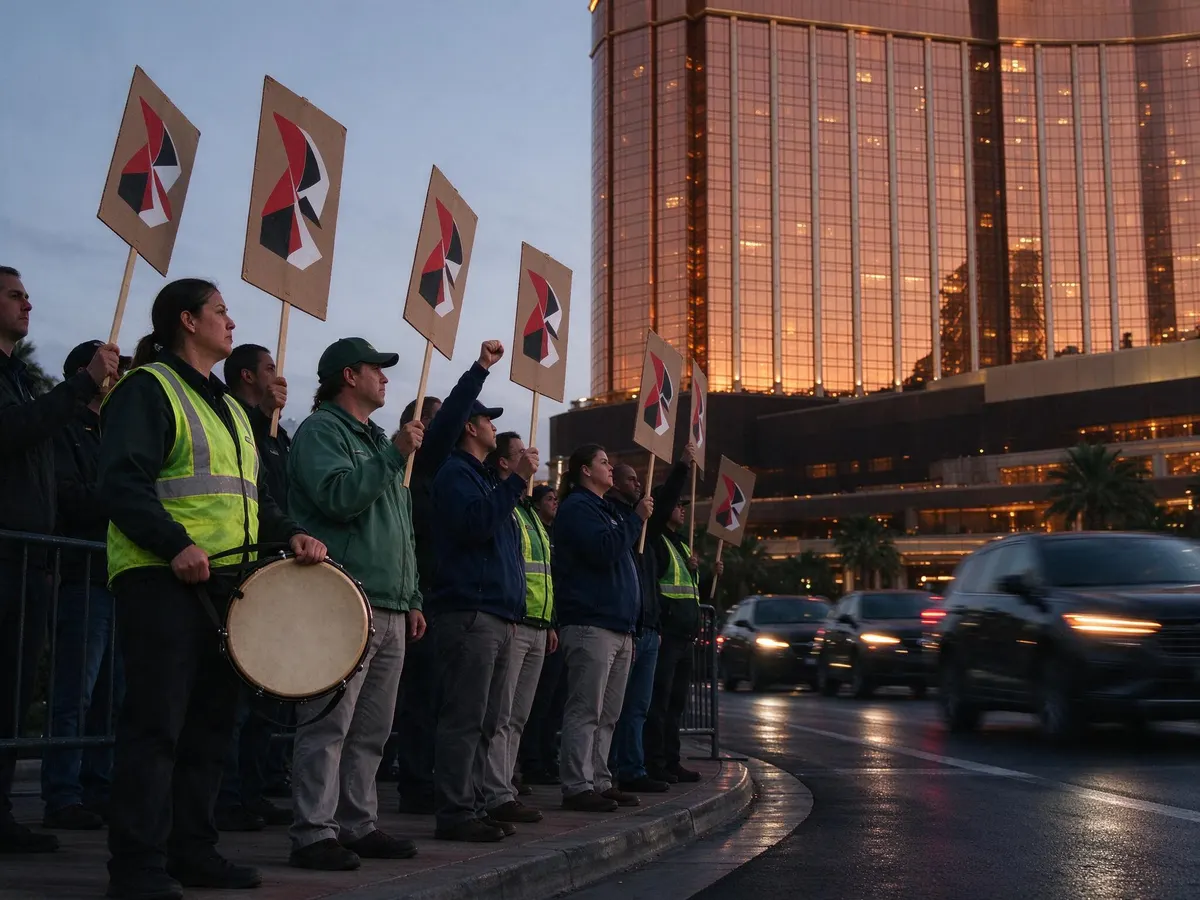
The picket line outside Encore Boston Harbor has been up since Sept. 4, the drums are still audible from the hotel rooms, and the bargaining table has barely been used. That is the real headline of the Encore Boston strike: UNITE HERE Local 26 told Casino.org on Oct. 6 that its negotiators have sat down with Wynn Resorts management only twice since more than 1,300 workers walked out, most recently on Sept. 30.
Two sessions in five weeks is not a negotiation that is grinding slowly toward a deal. It is a standoff. Both sides are still issuing statements about wanting a fair agreement, but the meeting cadence tells you where this actually sits, and it points to a dispute measured in months rather than weeks.
How the dispute got here
The collective bargaining agreements covering Teamsters Local 25 and UNITE HERE Local 26 at Encore Boston Harbor expired Aug. 31. Four days later, the workers those unions represent, housekeepers, servers, cooks, bartenders, slot attendants and warehouse staff, walked off the job after talks broke down.
The union asks are specific: a $10-per-hour wage increase phased over four years, a $25-per-hour starting minimum wage, and language locking in existing healthcare and pension benefits. Wynn has declined to meet those terms, pointing out that workers covered by the two locals already average close to $96,000 a year in pay and benefits.
| Issue | Union position | Wynn’s stated position |
|---|---|---|
| Wage increase | $10/hour over four years | Not accepted; wants a “financially sound” deal |
| Starting pay | $25/hour minimum | Cites ~$96,000 average annual pay and benefits |
| Benefits | Guarantees on current healthcare and pension | Commits to “recognizing the contributions of employees” |
| Benchmark | Match the “Boston standard” at nearby union hotels | Protecting jobs and long-term economic benefit |
| Talks since Sept. 4 | Two sessions, latest Sept. 30 | Says it is working toward an agreement |
The two sides are not measuring the same thing
Read the public statements side by side and the gap is partly arithmetic, partly framing. The unions talk in hourly rates. Wynn talks in total annual compensation, a number that bundles benefits and, for tipped classifications, income that does not show up in a base wage.
That difference is not a detail. A $25 hourly minimum works out to roughly $52,000 a year for a full-time schedule before benefits, which is a long way from $96,000, and both figures can be accurate at once depending on what you count and which job you look at. Until someone agrees on the measuring stick, each side can keep calling the other unreasonable without either one lying.
The union’s own framing is the “Boston standard,” by which it means the pay and protections union hotel workers hold for comparable jobs at other properties in the area. Local 26’s complaint is not only that Wynn said no on money, it is that Wynn has not put forward a trade, a phase-in, or any alternative route to that benchmark. Wynn, for its part, says it wants a deal that keeps Encore “a strong employer and economic engine for Massachusetts.” Those positions are not technically incompatible. They are just not being tested in a room very often.
What a long strike actually does to a casino floor
Wynn says most operations inside Encore Boston Harbor are running normally, and guest feedback suggests that is partly true and partly optimistic. Recent reviews split hard. One visitor described the property as immaculate and the service as top notch even under strike conditions. Another called it not worth a visit, citing poor service, closed restaurants, closed valet, and picket drums audible through the night.
That split is typical of a struck casino, and it is worth understanding why. A gaming floor is more resilient than a hotel kitchen. Slot machines keep taking bets. Table games keep dealing. What degrades first is everything wrapped around the gambling:
- Food and beverage. Restaurants are the hardest outlets to backfill, because cooks and servers are skilled, licensed in some cases, and numerous. Closures and reduced hours show up immediately.
- Housekeeping. Room turnover slows, which forces hotel inventory decisions and cuts into the highest-margin visits.
- Floor service. Slot attendants handle hand-pays, jams, ticket problems and player questions. Thin coverage means longer waits at exactly the moment a player has just won something.
- Valet and front-of-house. Low-visibility until it is gone, then it is the first thing a guest mentions in a review.
- Atmosphere. A picket line and drums are a deliberate, perfectly legal reputational cost, and they work on precisely the discretionary-trip customer a resort casino wants.
The commercial pattern follows from that. Gaming revenue tends to hold up better than hotel and F&B revenue during a walkout, because core slot and table play needs fewer people per dollar wagered. But the high-value customer, the one booking a suite and a dinner reservation, is the one most likely to reschedule. Strikes compress the premium end of the business first.
Why iGaming readers should care about a land-based labor fight
The obvious reason is cost structure, and it cuts straight to the economics that separate online gambling from bricks and mortar. An online casino serves tens of thousands of simultaneous players with a headcount that would not staff a single resort restaurant. A property like Encore employs thousands, and labor is the dominant operating expense. Every dollar an hour agreed at the bargaining table in Everett flows through the property’s margin for years. That is the structural reason operators with both channels keep leaning into digital, and the reason land-based labor settlements get scrutinised by analysts who never set foot on a casino floor.
The second reason is competitive substitution. Massachusetts is a limited-licence market, so a struck casino does not lose customers to a rival across the street. It loses them to the other licensed venues in the state, to tribal and commercial properties in neighbouring states, and to a phone. Massachusetts has legal sports betting but has not legalised online casino gaming, so there is no in-state iCasino alternative. Even so, a bad trip during a strike is the kind of experience that nudges a recreational player toward betting from the couch and not going back.
The third reason is reputational, and it is the one operators consistently underestimate. Labour disputes at casinos are unusually visible because the business depends on hospitality perception. Picket footage, review-site damage and local press coverage accumulate. A property can recover gaming revenue in a month. Review averages and corporate relations with a regulator-facing workforce take longer. Encore Boston Harbor holds a Massachusetts commercial gaming licence, which means its operations and community commitments sit in public view in a way an offshore online brand’s never do.
What would actually move this
Watch the meeting count, not the press releases. Strikes rarely end because one side changes its mind in public; they end when sessions become frequent, long and private. A jump from two meetings in five weeks to two meetings a week is the first genuine signal of progress.
After that, watch for structure rather than headline numbers. The union’s complaint is the absence of a phase-in or a trade, so any proposal that reaches the Boston standard over a longer horizon, or that swaps wage timing for benefit certainty, is the shape a settlement is likely to take. Pattern bargaining tends to land near comparable properties eventually; the fight is over how long the ramp is and who absorbs the healthcare and pension risk along the way.
And watch the financial reporting cycle. Wynn operates a large portfolio, so Encore’s disruption is unlikely to be existential at group level, but a strike that runs through a full quarter starts producing numbers that make an expensive settlement look cheap. That calculation, more than any statement about fairness, is usually what gets a contract signed.
One thing the public record does not yet tell us
Neither side has disclosed what Wynn has actually proposed in dollar terms, which is the single missing fact in this dispute. We know the union’s asks, we know Wynn’s compensation figure, and we know the talks are rare. We do not know whether the gap is $2 an hour or $8, and that is the difference between a dispute that resolves this quarter and one that drags into a second contract year. Until a specific company offer is on the record, any prediction about the end date of the Encore Boston strike is guesswork dressed up as analysis.